CHILE
Basic information
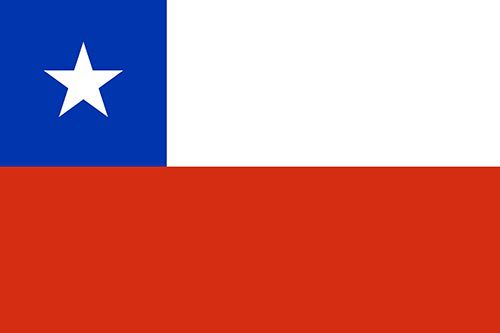
OFFICIAL NAME: Republic of Chile
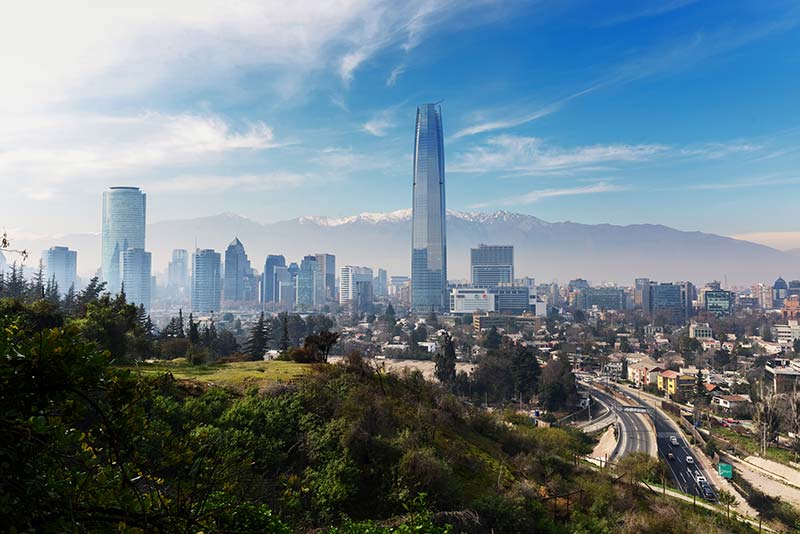
CAPITAL: Santiago
SQUARE KILOMETERS: 756,096 kms²
POPULATION: 20,150,948 (2024 Population Estimates and Projections, INE)
OFFICIAL LANGUAGE: Spanish
INDEPENDENCE DATE: September 18, 1810
About Chile
Chile is the longest and narrowest country in the world, stretching between the Andes Mountains and the Pacific Ocean. Its geography offers landscapes as diverse as they are remarkable: from the driest desert on the planet, to dense forests with unique native species, to ancient glaciers — some still waiting to be explored. These dramatic climatic contrasts have shaped the culture, identity, and character of its people. Warm, energetic, and welcoming, Chileans share a deep love for their land that invites building bridges across distances, having unforgettable experiences, and discovering and learning more about this fascinating country.
Political System
Chile is a representative democratic republic with a presidential system of government. The State is divided into three independent branches: the Executive (headed by the President), the Legislative (Senate and Chamber of Deputies), and the Judiciary (Courts of Justice).
Economy
Chile has an open economy that is integrated into international markets and recognized for its macroeconomic stability, solid institutional framework, and commitment to rules-based trade. The country benefits from strong economic institutions, including an autonomous Central Bank, sound fiscal policy, and clear rules for investment.
Chile has one of the world’s most extensive networks of trade agreements , with 36 trade agreements covering 66 economies that together account for 89% of global GDP. This international integration has been a cornerstone of Chile’s development strategy, enabling the country to expand its export markets, diversify economic ties, and strengthen its role in regional and global value chains.
At the regional and international levels, Chile is a member of the Pacific Alliance, the Organisation for Economic Co-operation and Development (OECD), and the World Trade Organization (WTO). The country is also an active participant in international economic forums such as the Asia-Pacific Economic Cooperation (APEC) forum, as well as other regional and global cooperation agreements and platforms.
In recent years, the Chilean economy has transitioned from the post-pandemic recovery cycle toward macroeconomic normalization. According to the Central Bank of Chile, GDP grew by 2.5% in 2025, while inflation continued to converge toward the 3% target in line with monetary policy projections. For 2026, the International Monetary Fund projects GDP growth of 2.4% and average inflation of 2.9% for Chile.
Foreign trade remains a key pillar of the Chilean economy. In 2025, total trade in goods recorded annual growth of 11.0%, driven by increases in both exports and imports. This performance underscores the importance of Chile’s international integration and its ability to sustain dynamic trade relationships, even amid a global environment marked by geoeconomic tensions, technological shifts, and new demands related to sustainability, resilience, and innovation.
To this end, Chile seeks to further strengthen its regional and global economic integration, by promoting more sustainable and resilient trade, with special emphasis on export diversification, investment attraction, the energy transition, the digital economy, and the development of value chains.
Source: SUBREI, Central Bank of Chile, National Institute of Statistics, International Monetary Fund, and the Organisation for Economic Co-operation and Development.
Links of interest