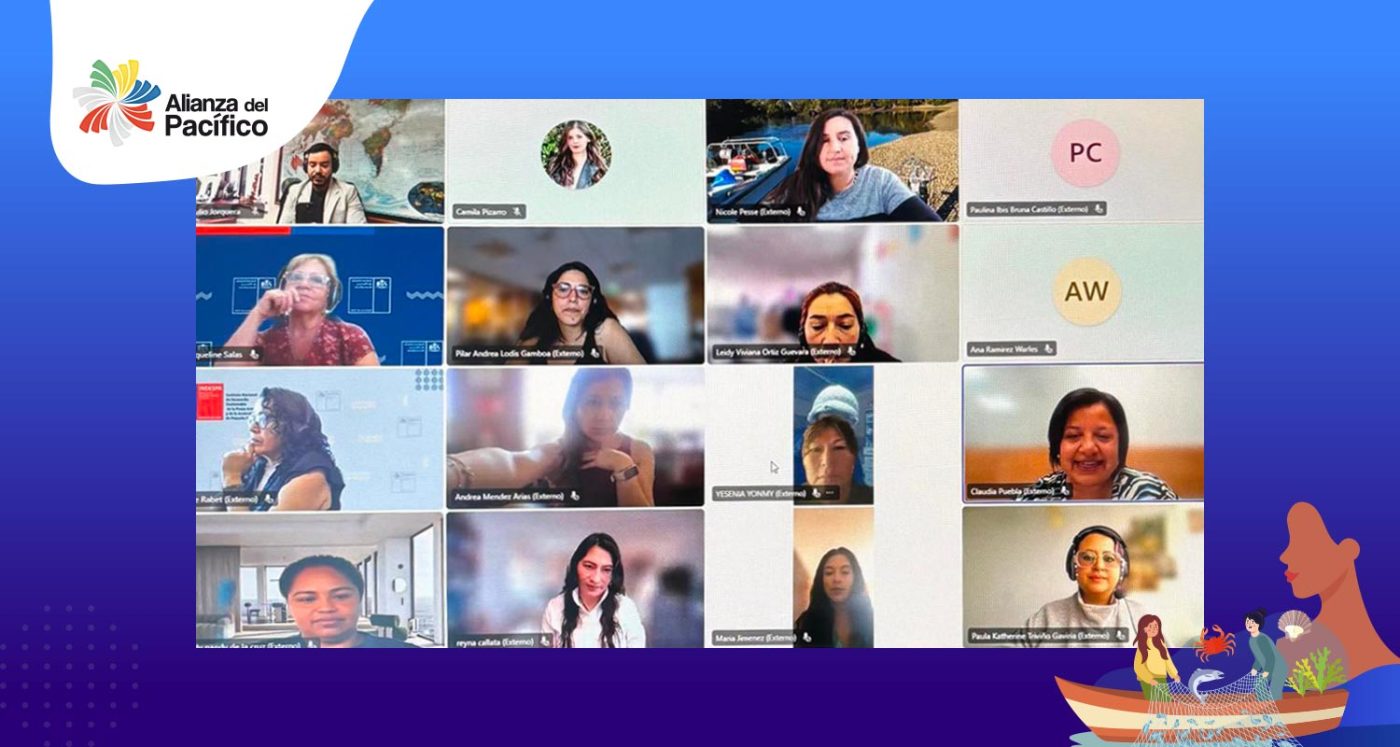
February 12, 2026.- The Pacific Alliance Fisheries and Aquaculture Technical Group, with the support of the Pacific Alliance Gender Technical Group, held the webinar “Women Who Inspire: Entrepreneurship and Collective Organization in Artisanal Fisheries and Aquaculture.” The event aimed to raise the visibility of women’s leadership and strengthen collective organization in the artisanal fisheries and aquaculture sector. Representatives from Chile, Peru, Mexico, and Colombia participated.
The meeting was organized by Chile as part of the work plan of the Fisheries and Aquaculture Technical Group. The initiative reaffirmed Chile’s commitment to promoting gender equality and strengthening the artisanal fisheries and aquaculture sector in the region. More than 45 women from the four Pacific Alliance member countries participated in the event and remained connected throughout the session, demonstrating strong interest and commitment to the topic.
The event provided a forum to exchange local experiences, identify shared challenges, and reinforce the region’s commitment to women’s economic autonomy in the fisheries and aquaculture sector. Participants highlighted collective organization as a key tool for sustainable development.
During the opening session, Paula Katherine Triviño Gaviria, Director for Women’s Economic Autonomy at Colombia’s Ministry of Equality and Equity and representative of the Gender Technical Group, underscored the importance of mainstreaming a gender perspective across the four pillars of integration: the free movement of goods, services, capital, and people. She emphasized that strengthening women’s leadership contributes to more inclusive trade and more equitable economic growth in the region.
The main panel discussion featured women leaders from the artisanal fisheries and aquaculture sector:
Mexico: Cindy Pandy de la Cruz shared the experience of a women’s cooperative officially registered in 2020. She highlighted that legal organization, clearly defined roles, and teamwork have strengthened aquaculture production and increased visibility within a historically male-dominated sector.
Peru: Reina Callata, manager of an aquaculture operation in the Peruvian highlands, described the consolidation of a sustainability-focused project producing certified organic trout. The initiative has been led by women over the past decade.
Chile: María José Jiménez, a seaweed harvester and seafood vendor, emphasized that collective organization accelerated growth, expanded access to training, and strengthened recognition of women’s work in artisanal fisheries.
Participants agreed that collective organization not only improves productivity, but also strengthens resilience in times of crisis, facilitates access to financing, and contributes to community cohesion.
They also identified outstanding challenges, including the formal recognition of women’s work across all stages of the value chain and the need for greater institutional support in technical and regulatory matters.
The webinar concluded with a call to continue strengthening regional networks of women in the sector, promote collaboration over competition, and strengthen forums for exchange that advance economic integration with a gender perspective.
This initiative is part of the 2025–2026 work agenda of the Fisheries and Aquaculture Technical Group. It reaffirms the commitment of the member countries to sustainable development, equity, and women’s leadership in the coastal and rural territories of the region.