Pacific Alliance countries reinforce agenda for women’s leadership and economic empowerment

The Third Ministerial Meeting on Women’s Empowerment and Economic Autonomy in the Pacific Alliance was held at the headquarters of the Colombian Ministry of Foreign Affairs, in conjunction with the Ministry of Equality and Equity and the Ministry of Commerce, Industry, and Tourism of that country, within the framework of Colombia’s Pro Tempore Presidency of the Pacific Alliance for 2025.

September 29, 2025. The event provided an opportunity to exchange regional perspectives on concrete work for public policies and programs aimed at the economic empowerment of women in the four member countries: Chile, Colombia, Mexico, and Peru.

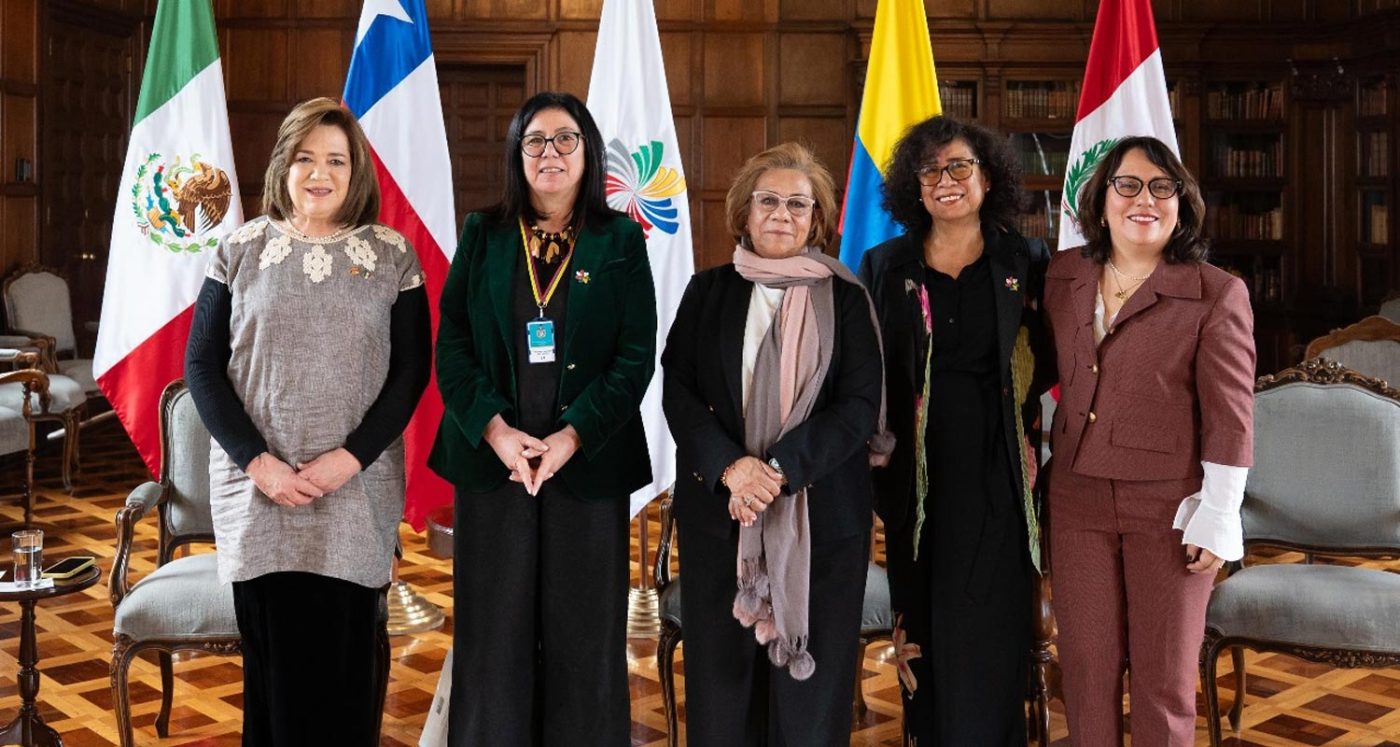
The meeting was attended by Chile’s Undersecretary for Women and Gender Equality, Claudia Donaire Gaete; Colombia’s Deputy Minister for Women, Olga Lucía Fuentes; and Peru’s Director General for the Promotion and Development of Women’s Economic Autonomy, Shirley Mozo Mercado, who led an inter-institutional dialogue and exchange based on successful experiences and focused on defining priorities and actions to be implemented, in light of three thematic areas:

  • Women’s participation in the labor market in the region, for their inclusion in the labor market and entrepreneurship.
  • Women’s leadership and participation in decision-making.
  • Training in STEM (Science, Technology, Engineering, and Mathematics) as a pathway to their integration into industry.

It is worth noting the attendance of representatives from CAF – Development Bank of Latin America and the Caribbean, Inter-American Development Bank (IDB), UN Women, the Presidential Agency for International Cooperation (APC-Colombia), the Free and Productive Women’s Fund of the Vice Presidency of Colombia, and the National Association of Entrepreneurs of Colombia (ANDI), representing the Business Council of the Pacific Alliance. This participation strengthened the discussion on the gender perspective in the mechanism and, in turn, allowed for the sharing of progress in the implementation of the Roadmap for the Autonomy and Economic Empowerment of Women in the Pacific Alliance (HRAEM).

The discussion also focused on the results of the virtual sectoral pre-forums held prior to the Third Ministerial Meeting, which involved the public sector, civil society, and the private sector. Through guiding questions on issues such as the gender gap, access, leadership, and participation, diverse and participatory inputs were gathered from representatives of each sector, strengthening the multisectoral dialogue ahead of the in-person meeting.

“May this meeting be an opportunity to agree on concrete and joint actions that empower women and, with them, our economies and our societies,” concluded Colombia’s Minister of Foreign Affairs, Rosa Yolanda Villavicencio.

The third edition of the meeting culminated in ministerial support for the joint agenda proposed by the Technical Gender Group to be presented to the Business Council of the Pacific Alliance, so that common and coordinated frameworks for action can be established to promote women’s empowerment and economic autonomy with the active involvement of the private sector.

Communications PPT 2025 Pacific Alliance

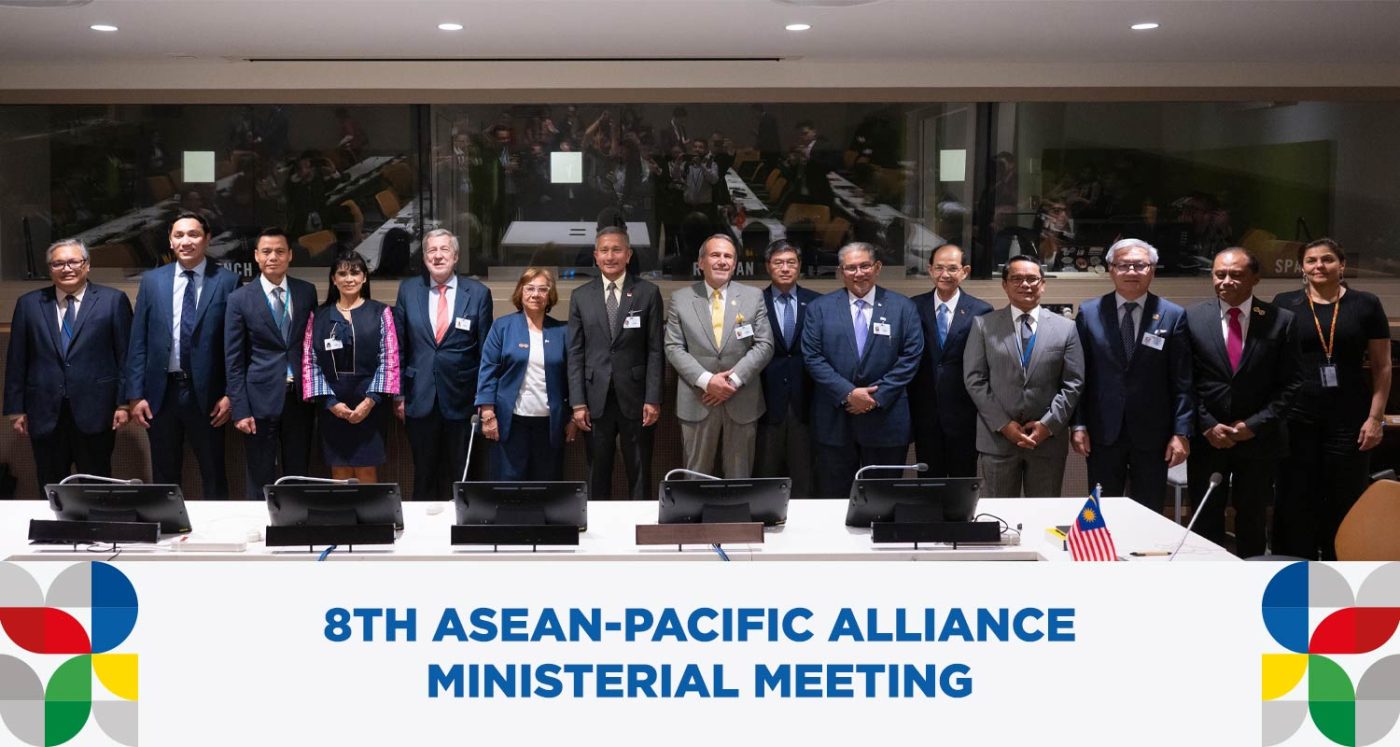
The 8th ASEAN–Pacific Alliance Ministerial Meeting was held in New York

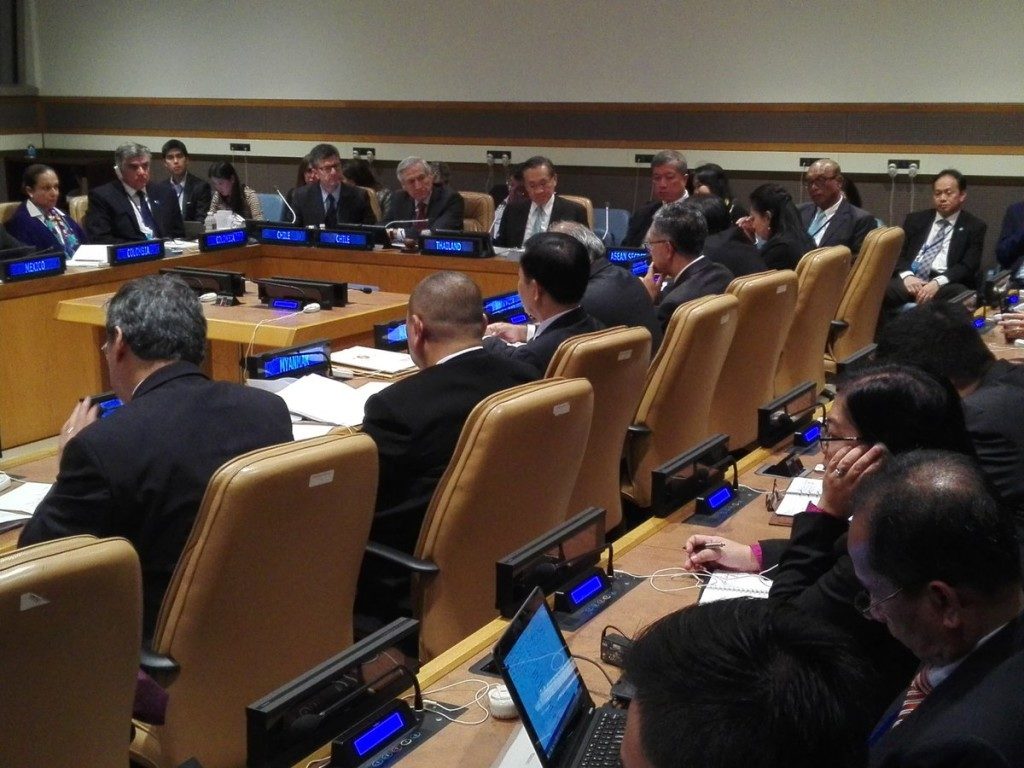
September 24, 2025. – Within the framework of the 8th Ministerial Meeting between the Association of Southeast Asian Nations (ASEAN) and the Pacific Alliance (PA), held at the United Nations headquarters in New York, Colombia, in its capacity as Pro Tempore Presidency of the Pacific Alliance, reiterated the strategic importance of the relationship with ASEAN and its commitment to continue strengthening bi-regional cooperation ties.

Colombia’s Minister of Foreign Affairs, Rosa Yolanda Villavicencio, encouraged ASEAN member states to deepen their cooperation with the Pacific Alliance, noting that “together, we can amplify our efforts in key areas such as digital transformation, sustainable development, education, trade, and innovation. These are real tools for contributing to peace and prosperity in times of uncertainty and instability.”

The ASEAN-AP Tourism Microsite and the Online Learning Initiative, a joint platform for sharing best practices in sustainable tourism and tourism innovation, with content contributed by countries from both regions, were also presented at the event.

The session concluded with the reading of the joint press release by the co-chairs, the Minister of Foreign Affairs of Singapore, on behalf of ASEAN, and the Minister of Foreign Affairs of Colombia, on behalf of the Pacific Alliance.

Below:

CO-CHAIRS’ PRESS RELEASE 
8th ASEAN-PACIFIC ALLIANCE MINISTERIAL MEETING

    1. The 8th ASEAN-Pacific Alliance Ministerial Meeting was held on 24 September 2025 on the sidelines of the 80th Session of the United Nations General Assembly (UNGA) in New York City, USA. The Meeting was co-chaired by Minister for Foreign Affairs of the Republic of Singapore, H.E. Dr Vivian Balakrishnan, and Minister of Foreign Affairs of Colombia, H.E. Rosa Yolanda Villavicencio.

    2. The Ministers noted the recent developments in ASEAN and the Pacific Alliance, and reaffirmed ASEAN’s and the Pacific Alliance’s unwavering commitment to upholding multilateralism and the multilateral trading system as well as the importance of continued inter-regional cooperation in mutually beneficial areas for the peoples of the two regions. These include, among others, trade and investment, digital and green economies, Micro, Small and Medium sized Enterprises (MSMEs), sustainable development, tourism, as well as cultural, academic and other people-to-people exchanges.

    3. The Ministers took note of the progress of the implementation of the ASEAN-Pacific Alliance Work Plan (2021-2026) under its five pillars: (i) Economic Cooperation; (ii) Education and People-to-People Contacts; (iii) Science, Technology and Innovation as well as Smart Cities and Connectivity; (iv) Environment and Sustainable Development and; (v) Cooperation on Post-Pandemic recovery due to COVID-19.

    4. The Ministers highlighted the importance of fully and effectively implementing the remaining activities under the current ASEAN-Pacific Alliance’s Work Plan including preparations for a new Work Plan that will reflect emerging challenges and opportunities, and reiterated their commitment to continue pursuing regional integration and inter-regional cooperation initiatives, while acting within their respective areas of responsibility.

    5. The Ministers also welcomed the launch of the Tourism Microsite and E-Learning initiative as well as the proposed ASEAN-Pacific Alliance Cultural Week which aims to highlight the cultural vibrancy among the countries of both regions under the Education and People-to-People Contacts pillar of the Work Plan.

    6. The Ministers underscored Singapore’s progress towards Associated State status and the Pacific Alliance –Singapore Free Trade Agreement as a precedent for other ASEAN Member States to strengthen ties with the Pacific Alliance.

COMMUNICATIONS PPT PACIFIC ALLIANCE 2025

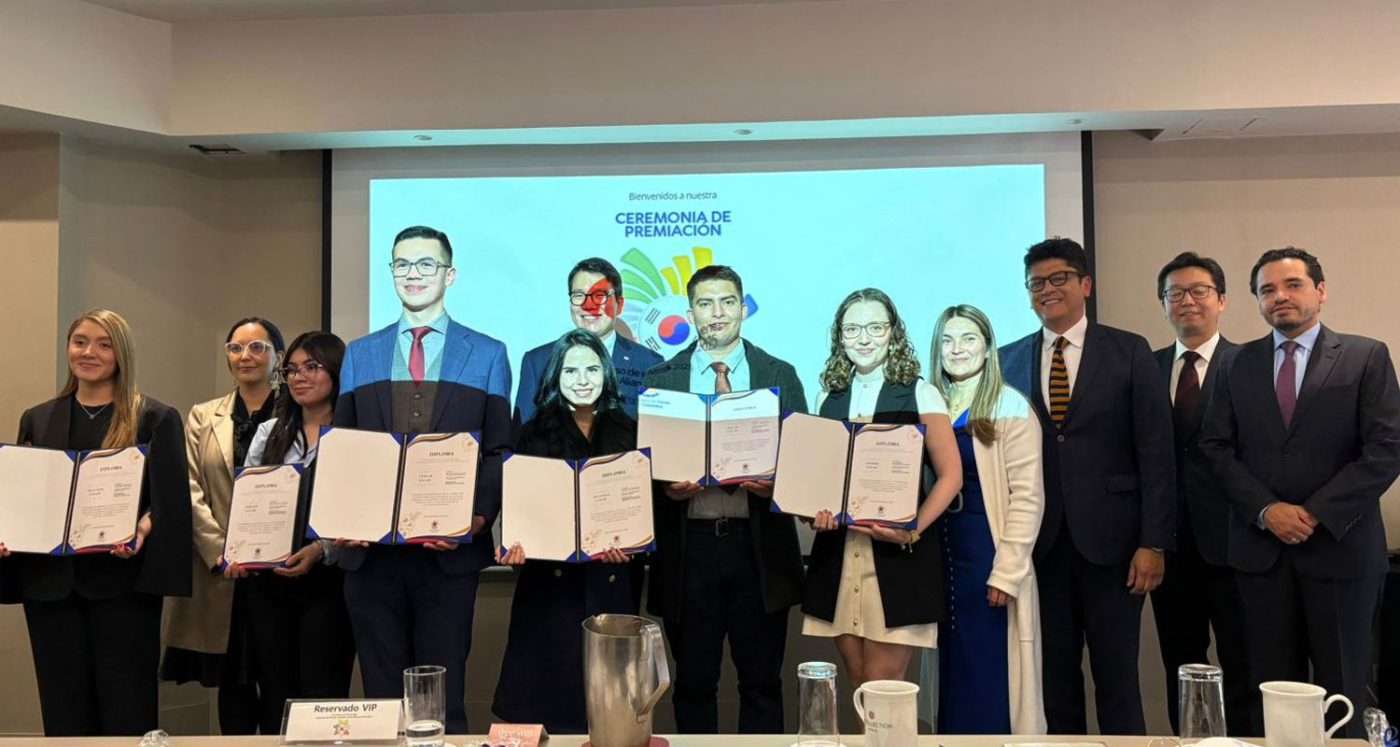
Pacific Alliance and Korea celebrate young talent and its role in regional integration

September 17, 2025.- The Pacific Alliance and Korea celebrated young talent and its role in regional integration with a youth essay contest, where more than 130 participants shared their thoughts on cooperation, innovation, and sustainability.

This contest aimed to strengthen dialogue between the Pacific Alliance and Korea through the ideas of young people.

PPT Communications 2025 Pacific Alliance

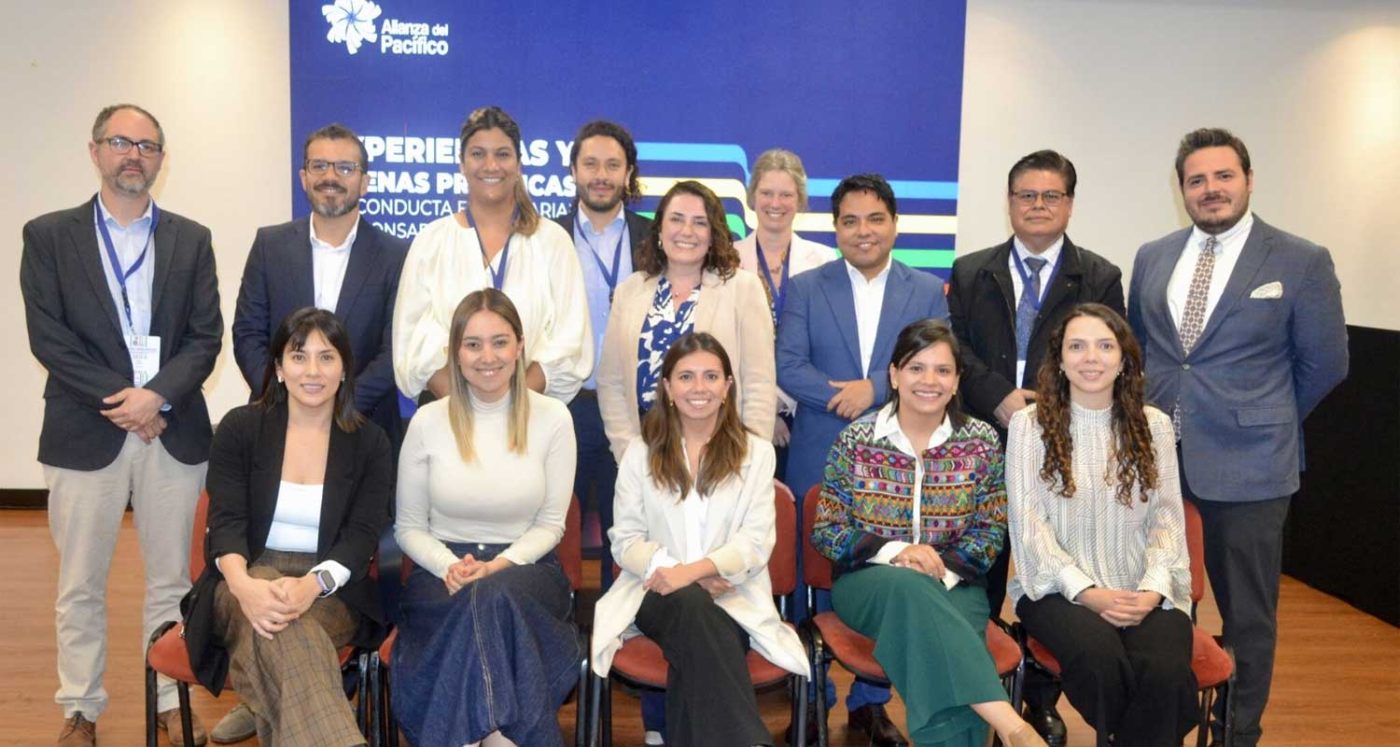
Experiences and Good practices in Responsible Business Conduct in the countries of the Pacific Alliance

September 8 and 9, 2025. – On September 8, as part of the study “Experiences and Good practices in Responsible Business Conduct (RBC) in the Pacific Alliance countries,” funded by the Pacific Alliance Fund and developed by Conscientia, a face-to-face meeting was held in Bogotá, bringing together representatives from the governments of Chile, Colombia, Mexico, and Peru. Members of the Technical Group on Environment and Green Growth and the Subgroup on Responsible Business Conduct participated with the aim of reviewing the progress and preliminary results of the study, as well as promoting joint reflection on the challenges and opportunities for further strengthening the RBC agenda in the region.

During this event, the official launch of the OECD Regional Platform for Training and Dialogue on Responsible Business Conduct (RBC), Trade, and Investment was also celebrated. This initiative is part of the Responsible Business Conduct in Latin America and the Caribbean (CERALC) project, funded by the European Union and implemented in conjunction with the ILO and OHCHR.

This training space, inaugurated with the participation of more than 70 public officials from 12 countries in Latin America and the Caribbean, seeks to consolidate a community of practice to promote responsible business conduct through trade and investment in the region. The event was attended by representatives of governments, multilateral organizations, and National Contact Points, reaffirming the regional commitment to more responsible, sustainable, and human rights-aligned business conduct.

As part of the activities to disseminate the study on Experiences and Good Practices in Responsible Business Conduct (RBC) in the countries of the Pacific Alliance, a public event was held in Bogotá on September 9, bringing together representatives from governments, international organizations, businesses, trade associations, civil society, and academia, with the aim of strengthening this agenda in the region. The event was held in the Mario Laserna Auditorium of the Uniandinos Association and was broadcast live on the Pacific Alliance’s Facebook Live channel, allowing for a wider reach and facilitating the participation of actors from different countries.

The event opened with remarks by María Mesonero, representing the Pacific Alliance, and Camila Miranda, director of Conscientia, who highlighted the importance of RBC as a condition for competitiveness, sustainability, and social legitimacy.

One of the highlights was the live podcast “Panorama of RBC in Latin America,” hosted by José Fernando Gómez (CREER) together with Carlos de la Torre, from the United Nations High Commissioner for Human Rights in Colombia. The conversation underscored the need to integrate human rights into complex economic environments as an opportunity to generate virtuous circles and real transformations in the territories where companies operate. De la Torre highlighted the urgency of translating standards into concrete practices, pointing out the potential of the Pacific Alliance as a regional platform to align common efforts and serve as an international benchmark in RBC matters.

The RBC Talks offered key insights into the challenges facing the region:

  • Miguel Castro, OECD Focal Point for Latin America and the Caribbean, emphasized that adopting international standards not only strengthens reputation, but also opens markets and ensures long-term sustainability. He emphasized the importance of energy transitions and critical minerals, noting that their use will be decisive for regional competitiveness, provided that communities, people, and the environment are placed at the center. He also highlighted the opportunity for the Pacific Alliance to establish regional RBC frameworks that enable productivity, development, and just transitions, with responsible business conduct as a compass.
  • Rosa Peña, from the Interamerican Association for Environmental Defense (AIDA), began her speech by highlighting water as a fundamental element for life. She clarified that it is not a question of opposing development, but of preventing it from taking place at the expense of people’s health and lives. She reminded the audience that companies are not only economic actors, but also social actors embedded in a territory, with responsibilities towards communities and the climate crisis. She stated emphatically: “Without responsibility, there is no future.”
  • Juan Ibáñez, Secretary General of the Catholic University of Chile, presented the five tools of sustainability: purpose, due diligence, materiality, stakeholders, and ethics and compliance. He pointed out that these tools are available and have proven to be effective. “The present is ours. We owe it to our stakeholders and future generations. Let’s implement them,” he said in a call to move from theory to action.

The meeting also included the presentation of the RBC Study in the Pacific Alliance, by Camila Miranda and Diana Muñoz (Conscientia). The analysis highlighted common trends in the four countries, progress by country, and notable initiatives, along with persistent gaps in policy implementation and strategic opportunities to consolidate a shared agenda.

In the final phase, attendees participated in thematic working groups (human rights, environment, corporate governance and transparency, and local development and competitiveness), where they developed concrete recommendations that will be included in the final report.

The closing remarks were given by Humberto Cantú (University of Monterrey), who emphasized that Responsible Business Conduct is no longer aspirational but has become an indispensable condition for development. He stressed that the key lies in collaborative and multi-stakeholder work and in the ability of the Pacific Alliance countries to transform reflections into sustainable and replicable actions. He also highlighted the need to move towards a structural and regional vision of a regulatory framework for RBC, and to strengthen the cross-cutting nature of this agenda in foreign trade as a strategic element for the bloc’s competitiveness and international legitimacy.

With this event, the Pacific Alliance reaffirmed its commitment to move towards a development model based on Responsible Business Conduct, which balances economic growth, respect for human rights, and environmental sustainability.

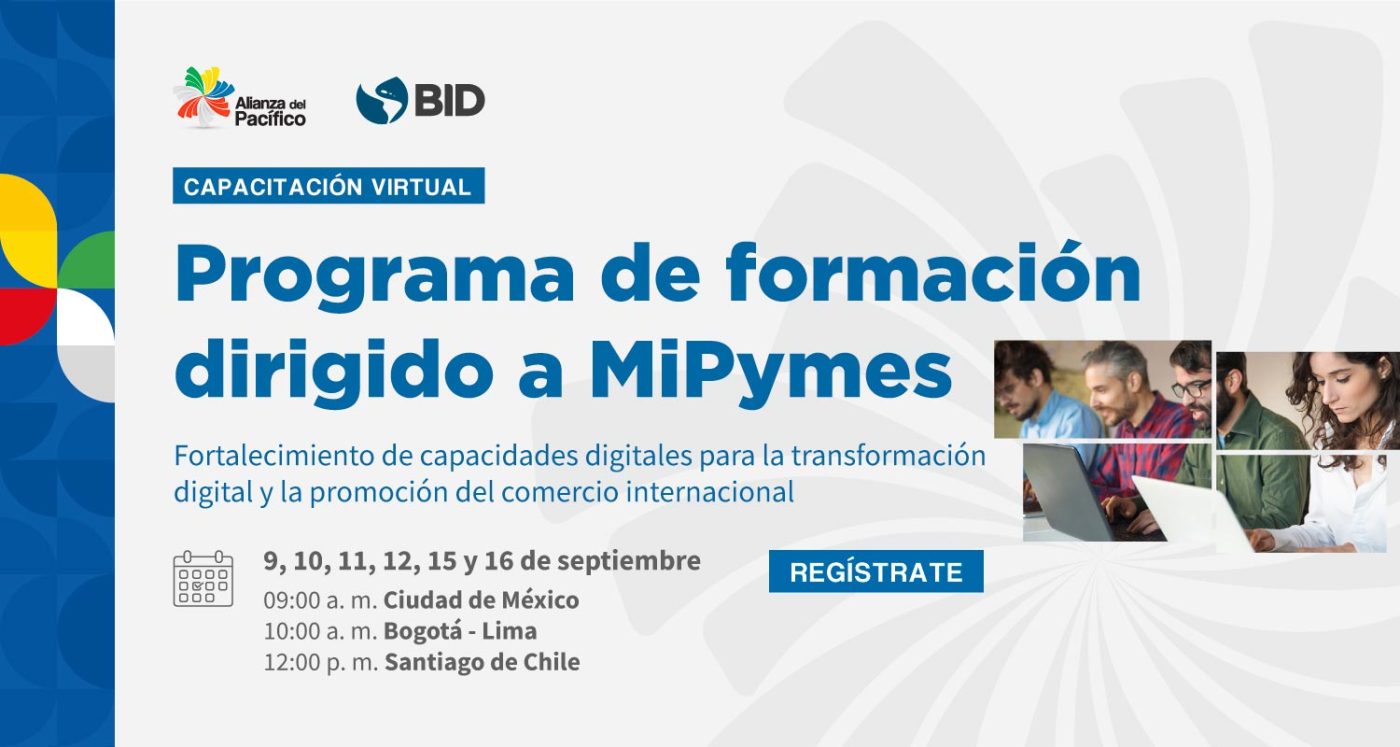
¡Take your MSME to the next digital level!

The Pacific Alliance (PA) and the Inter-American Development Bank (IDB) invite you to participate in the free virtual training program: “Strengthening digital capabilities for digital transformation and the promotion of international trade.”

When: Between September 9 and 16, 2025.

Who can participate: Business owners or entrepreneurs from micro, small, or medium-sized enterprises (MSMEs) in the region.

Schedule: 9:00 a.m. Mexico City / 10:00 a.m. Bogotá and Lima / 12:00 p.m. Santiago de Chile.

Program: Consists of six sessions that will cover the following topics:

  • Digital platforms, online stores, and payment systems (September 9)
  • Digital marketing and social media (September 10)
  • Strategies for the internationalization of an MSME (September 11)
  • E-commerce regulations and standards (September 12)
  • Business leadership in the context of digital transformation, efficiency in the adoption of new technologies and tools based on Artificial Intelligence (September 15)
  • Logistics and international shipping (September 16)

Register here
Preliminary program

Secure your spot! Attendees will receive a digital certificate from the IDB.

Pacific Alliance and Singapore sign Free Trade Agreement

  • The Asian country is about to become the first Associated State of the integration bloc.

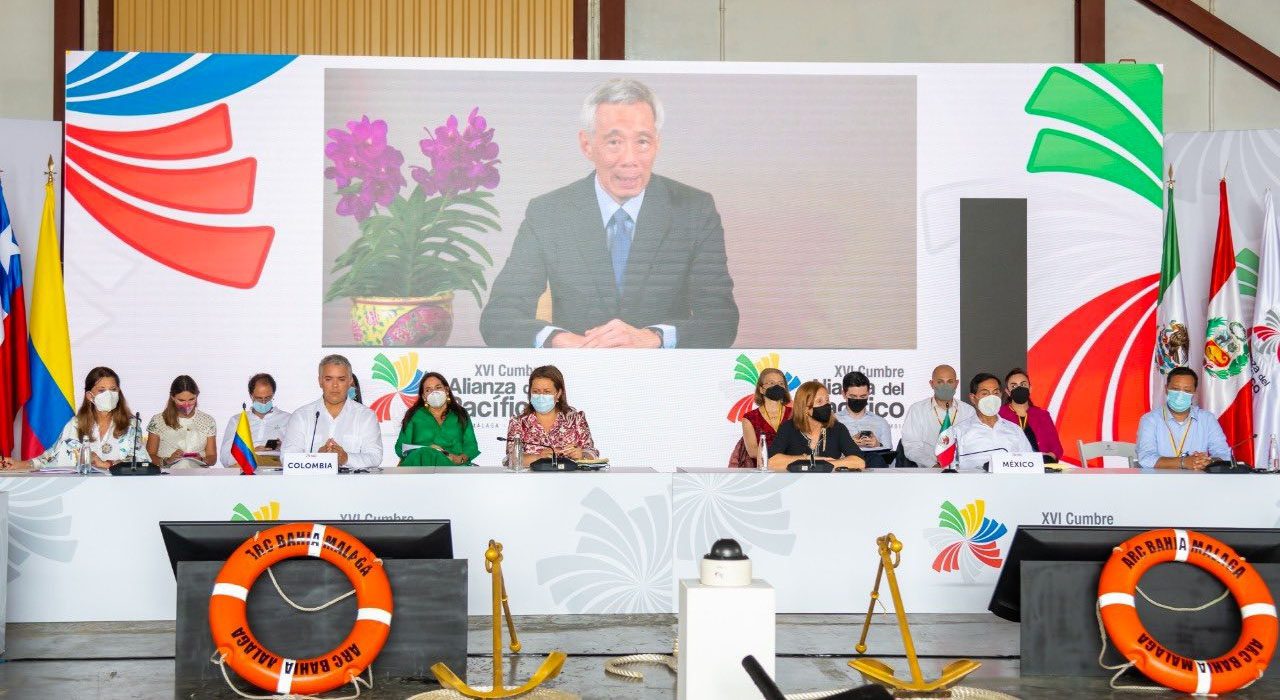
January 26, 2022 – In the framework of the XVI Summit of Presidents of the Pacific Alliance, the Trade ministers of Chile, Colombia, Mexico and Peru, on the one hand, and that of Singapore, on the other, signed the Free Trade Agreement, whose negotiations ended in July 2021.

This instrument must now comply with the procedures before the legislative bodies of each of the countries, and in the case of Colombia, it must subsequently pass to the endorsement of the Constitutional Court.

The Agreement includes 25 chapters in disciplines such as: market access for goods, sanitary and phytosanitary measures, rules of origin, technical barriers to trade, economic and customs cooperation, trade facilitation, investment, e-commerce, cross-border trade in services, maritime services, telecommunications, temporary entry of business persons, state-owned enterprises, public procurement, competition policy, good regulatory practices, gender, SMEs and legal and institutional matters.

The signing of this Agreement marks a milestone for this integration initiative because Singapore will become the first Associated State of the Pacific Alliance.

The negotiations with the Asian economy complement the trade relationship, encourage the attraction of investments, facilitate government procurement contracts and enhance the access of service providers to a wide range of sectors.

It also opens the door to cooperation in various areas such as energy, food trade, the digital economy, infrastructure and urban solutions, port management and logistics, and the interoperability of Foreign Trade Single Windows.

Reaching the Singapore market through this trade agreement will allow the countries of the Alliance to use regional inputs from different countries enhancing regional production chains. It is expected to attract investors from that country to the extended market of the bloc as a productive and export platform to the region.

The Pacific Alliance is made up of Chile, Colombia, Mexico and Peru. It has a population of 230 million, a per capita gross domestic product (GDP) of USD 19,000 and exports of USD 627 billion. This makes the group the eighth largest exporter in the world. The Asian country became an Observer State of the Pacific Alliance in 2014 and a candidate for Associate State in 2017. Negotiations for a Trade Agreement were finalized in July 2021, after four years of deliberations.

PACIFIC ALLIANCE PPT COMMUNICATIONS

Beneficios de negociación con Candidatos

Alianza del Pacífico (febrero 28, 2018). El proceso de negociación de la Alianza del Pacífico con Australia, Canadá, Nueva Zelandia y Singapur (Candidatos a Estado Asociado- CEA), permitirá al bloque avanzar en el cumplimiento de uno de sus objetivos fundamentales: convertirse en una plataforma de integración económica y comercial de proyección, trayendo beneficios directos para los empresarios de los cuatro países, en especial con la región del Asia Pacífico.

Los elementos clave de estas negociaciones para Chile serán la posible incorporación de nuevas materias, que actualmente no están contenidas en el Protocolo Adicional de la Alianza del Pacífico. Estos son: Defensa Comercial, Pymes, Cooperación, Propiedad Intelectual, Medioambiente, Laboral, Género y Comercio, Entrada Temporal de Personas de Negocios, y Empresas comerciales del Estado y Política de Competencia. La incorporación de estos capítulos permitirá abrir nuevas oportunidades para el país, al incorporar los temas que ya están marcando –y lo harán cada vez con más fuerza-, la agenda del comercio internacional del futuro.

En términos comerciales, no sólo se abren mejores oportunidades para productos chilenos en países del Asia Pacífico, sino que también en acumulación de origen, en los futuros Estados Asociados.

Finalmente, se destaca la similitud política y comercial de los CEA con los miembros de la Alianza del Pacífico, lo cual sería beneficioso para alcanzar una integración profunda y más dinamismo en el comercio global.

Para mayor información comuníquese a: Alianza_Pacifico@prochile.gob.cl

Enorme potencial de productos peruanos en Australia, Canadá, Nueva Zelanda y Singapur

Alianza del Pacífico (febrero 28, 2018). A US$ 1403.8 millones sumaron las exportaciones peruanas entre enero y noviembre de 2017 a Australia, Canadá, Nueva Zelanda y Singapur, candidatos a estados asociados de la Alianza del Pacífico, informó la Comisión de Promoción del Perú para la Exportación y el Turismo – PROMPERÚ

El país que tuvo la mayor demanda fue Canadá con US$ 1,125.4 millones, seguido de Australia con US$ 185.7 millones, Singapur con US$ 49.2 millones y Nueva Zelanda con US$ 43.5 millones. De estas cifras hay que destacar la cada vez mayor participación del sector no tradicional o con mayor valor agregado, principalmente de los subsectores que corresponden a alimentos.

En ese sentido, las cifras muestran una importante participación de productos agroindustriales como las uvas, quinua, mangos, espárragos, arándanos y diversas frutas; así como langostinos ytruchas específicamente hacia Canadá.

Australia y Canadá comparten el mismo interés por camisetas de algodón para damas y caballeros. En cuanto a Singapur, sobresalen los envíos peruanos de calzado y aleta de tiburón y en Nueva Zelanda la demanda de la peletería de alpaca y la cada vez mayor pedidos de fosfatos de calcio.

Estos cuatro mercados representan para los productos peruanos innumerables oportunidades de negocios, y resultan también ser muy atractivos para el tema de inversiones. Su inserción como estados asociados permitirá potenciar los acuerdos comerciales e incrementar el dinamismo con el Asia Pacífico, que se proyecta como una de los protagonistas de la economía global.

Para más información comuníquese a: alianzapacifico@promperu.gov.pe

Los países candidatos a Estado Asociado representan grandes oportunidades para La Alianza del Pacífico

Alianza del Pacífico (febrero 28 de 2018). Australia, Canadá, Nueva Zelanda y Singapur están en proceso para sumarse como países asociados del bloque de integración regional latinoamericano. A la fecha se han realizado dos rondas de negociación, la primera en octubre de 2017 en la ciudad de Cali, Colombia, y la segunda el pasado mes de enero en Gold Coast, Australia. Una tercera ronda tendrá lugar el próximo 3 de marzo en Santiago de Chile. La posible adición de estos cuatro integrantes representa nuevas oportunidades en inversión extranjera directa y exportaciones para Chile, Colombia, México y Perú.

Los países Candidatos a Estado Asociado (CEA) son jugadores importantes en el panorama mundial y representarían para la Alianza una oportunidad de incrementar el volumen de exportaciones con miras a mayor diversificación de mercados, productos y cadenas globales de valor, con una población de más de 70 millones de consumidores con alto poder adquisitivo.

México implementó una estrategia enfocada en la diversificación de mercados, por lo cual, los países CEA serían aliados clave. Australia y Nueva Zelanda, por ejemplo, ofrecen oportunidades para los productos alimenticios procesados, ya que la gastronomía mexicana tiene una gran aceptación en esos países, así como también para bebidas como la cerveza, el tequila, el mezcal y el café.

Al mismo tiempo, estos cuatro mercados representan importantes oportunidades de negocio para Perú, dentro de las cuales sobresalen productos agroindustriales como las uvas, quinua, mangos, espárragos, arándanos, confecciones y textiles, calzado, entre otros.

En el caso de Chile, se abren mejores oportunidades en acumulación de origen.

Para Colombia, por ejemplo, los CEA representan una gran oportunidad para atraer inversión extranjera y generar más exportaciones de productos agrícolas, manufacturas de cuero, textiles y confecciones e industrias 4.0, entre otros.

La incorporación de estos nuevos países fomentará un esquema de integración estratégica, que impulsará el desarrollo económico y la competitividad de las economías de los miembros de la Alianza del Pacífico.

Alianza del Pacífico, presente en FITUR 2018

Alianza del Pacífico (Enero 26 de 2018). Representantes del turismo de la Alianza del Pacífico se reunieron en el marco de la Feria de Turismo más importante de Iberoamérica, FITUR 2018 con el objetivo de fomentar y desarrollar el sector entre estos cuatro países; generar encuentros comerciales efectivos entre los empresarios, y promoverse como macro región de cara a terceros mercados como el asiático.

En el evento, al que asistieron la Subsecretaria de Turismo de Chile, Javiera Montes; Sandra Howard, Viceministra de Turismo de Colombia; Gerardo Corona, Subsecretario de Innovación y Desarrollo Turístico de México, y Alejandro Reyes, Director General de Estrategia Turística de Perú, se destacó la importancia del encuentro para construir estrategias conjuntas e intercambiar opiniones que  permitan crecer y avanzar conjuntamente en los mercados de los países de la Alianza.

El espacio, sirvió también para discutir temas como seguridad turística, cambio climático, innovación y emprendimientos en turismo.

Las autoridades de turismo destacaron que para la Alianza del Pacífico el mercado chino es muy importante, por lo que en los últimos años se ha coordinado y articulado como la mayor presencia de promoción turística de América Latina en China.